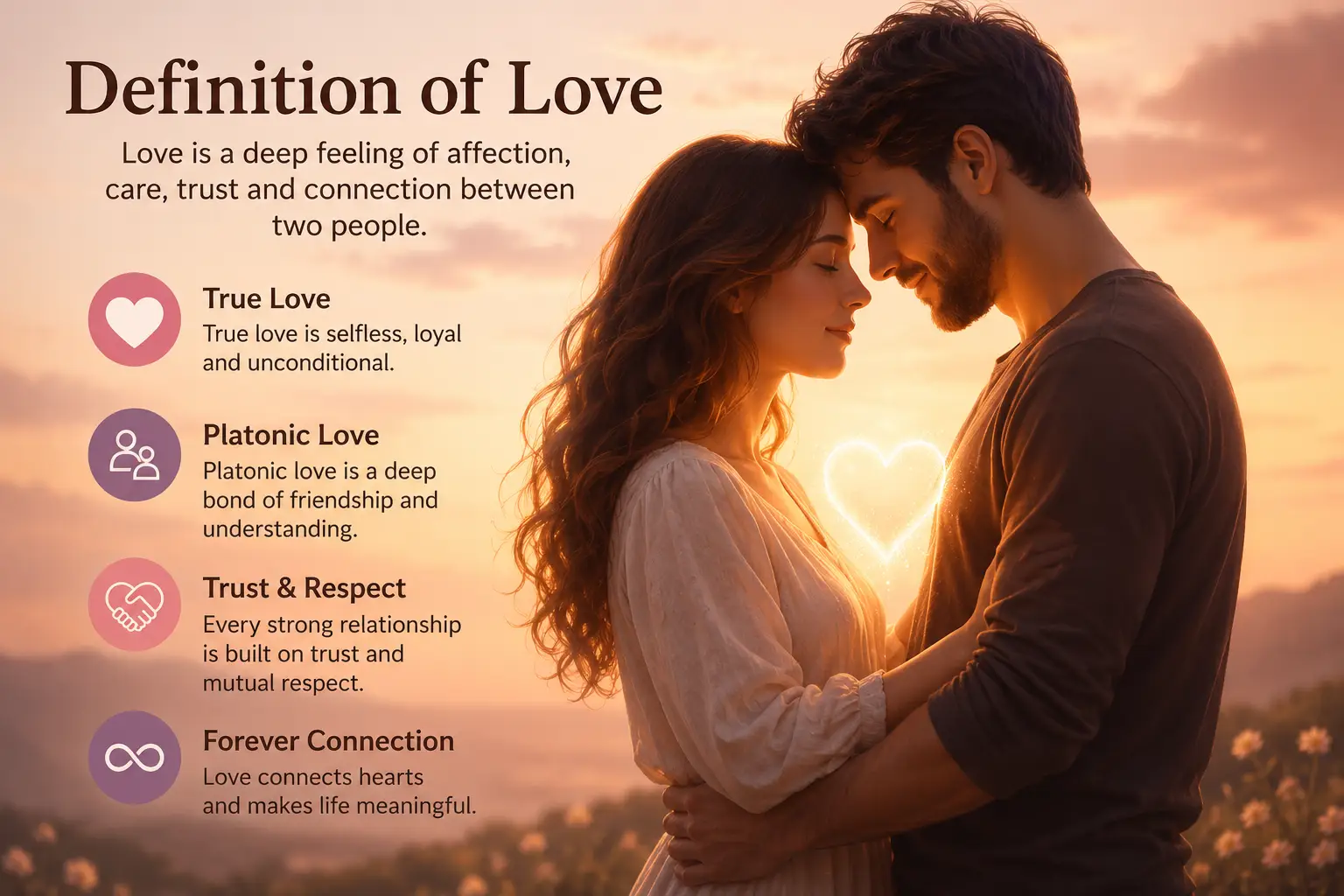
What Is Love? Definition, Meaning, Types of Love & Psychology
Love is one of the most meaningful human experiences. It can involve affection, emotional connection, trust, care, respect, commitment, and a desire to support another person. Although people experience love in different ways, healthy love is generally connected with mutual respect, communication, honesty, and emotional connection.
The meaning of love can also change throughout life. Romantic relationships, friendships, family connections, and self-love can all involve different forms of emotional attachment and care. Understanding these differences can help people build healthier and more meaningful relationships.
What Is the Definition of Love?
The definition of love can be described as a strong feeling of affection, care, attachment, or emotional connection toward another person. Love is not limited to romantic attraction. It can also develop between family members, close friends, and people who share meaningful experiences.
In a healthy romantic relationship, love is often expressed through trust, respect, kindness, communication, emotional support, and commitment. Strong feelings can be important, but lasting relationships usually require consistent actions as well as emotions.
There is no single definition that explains everyone’s experience of love. Culture, personal experiences, personality, family background, and individual values can all influence how a person understands and expresses love.
What Does True Love Mean?
True love is commonly associated with a deep and lasting emotional connection. It does not mean that a relationship is perfect or that disagreements never happen. Instead, healthy love involves the willingness to communicate, solve problems, respect boundaries, and support each other’s personal growth.
Trust and honesty are particularly important. People in healthy relationships should feel comfortable expressing their thoughts and feelings without fear of disrespect or manipulation.
What are common signs of healthy love?
- Mutual respect and consideration
- Honest and open communication
- Trust and emotional support
- Respect for personal boundaries
- Shared responsibility in the relationship
- Willingness to work through disagreements
What Is Romantic Love?
Romantic love refers to emotional and affectionate feelings between people who are romantically attracted to each other. It may include affection, excitement, emotional closeness, physical attraction, companionship, and a desire to build a future together.
Romantic attraction can be intense at the beginning of a relationship. Over time, however, successful relationships often depend on deeper qualities such as trust, compatibility, communication, shared values, and commitment.
What Is Platonic Love?
Platonic love is a close emotional connection that does not depend on romantic or sexual attraction. It is commonly associated with friendship, trust, affection, respect, and genuine concern for another person’s well-being.
A strong friendship can involve many of the same emotional qualities found in romantic relationships, including loyalty, understanding, support, and shared experiences. Platonic relationships can therefore be an important part of a person’s social and emotional life.
What Is Unrequited Love?
Unrequited love describes a situation in which one person has romantic feelings for another person but those feelings are not returned in the same way. Experiencing unrequited love can be emotionally difficult, especially when expectations and reality are very different.
Giving yourself time, maintaining healthy boundaries, talking with trusted people, and focusing on your own well-being can help when dealing with difficult romantic feelings.
Different Types of Love
Love can take many forms. Romantic love is only one part of the broader human experience of affection and emotional connection.
Romantic Love
Emotional and affectionate connection between romantic partners.
Platonic Love
Deep affection and emotional closeness that is not based on romantic attraction.
Family Love
Affection, care, and attachment between family members.
Self-Love
Healthy self-respect, self-care, and acceptance of your own needs and boundaries.
How Does Love Affect the Human Brain?
Love and romantic attraction involve several areas of the brain associated with reward, motivation, emotion, and social attachment. Research into romantic relationships has examined neurotransmitters and hormones including dopamine, oxytocin, serotonin, and other biological systems.
These biological processes can contribute to feelings such as excitement, attachment, motivation, and emotional closeness. However, human relationships are complex, and no single hormone or chemical can fully explain why two people fall in love or remain together.
Why Do People Fall in Love?
People can develop romantic feelings for many different reasons. Physical attraction, emotional compatibility, shared interests, proximity, communication, personality, and similar values can all influence romantic attraction.
Some relationships develop gradually through friendship and shared experiences, while others begin with strong romantic attraction. There is no single pattern that applies to every relationship.
Is Love a Feeling or a Choice?
Love can involve both feelings and choices. Emotional attraction may happen naturally, but maintaining a healthy relationship requires ongoing decisions. Listening, communicating honestly, respecting boundaries, keeping promises, and supporting one another are examples of behaviors that can strengthen a relationship over time.
Feelings can also change. A relationship may move from the excitement of early attraction toward a calmer form of emotional attachment and companionship. This does not necessarily mean that love has disappeared.
How Can You Recognize a Healthy Relationship?
A healthy relationship generally allows both people to maintain their individuality while building a meaningful connection. Respect and communication are important foundations.
- Both people can communicate openly.
- Personal boundaries are respected.
- Disagreements can be discussed without intimidation.
- Both partners have their own interests and friendships.
- Trust develops through consistent and honest behavior.
- Important decisions are discussed together.
Love, Trust and Communication
Love becomes easier to maintain when people can communicate clearly about expectations, feelings, boundaries, and future plans. Trust develops over time through reliable behavior and honest communication.
When disagreements happen, listening to the other person’s perspective can be more productive than trying to win an argument. Healthy communication does not mean agreeing about everything; it means being able to discuss differences respectfully.
Frequently Asked Questions About Love
What is the meaning of love?
Love is a strong emotional connection involving affection, care, trust, respect, attachment, or commitment. Its meaning can differ from person to person.
What is true love?
True love is commonly associated with a deep and lasting emotional connection, mutual respect, trust, communication, and commitment.
What is platonic love?
Platonic love is a close emotional relationship based on affection, friendship, trust, and respect rather than romantic attraction.
Can love change over time?
Yes. Feelings can change as people gain new experiences and relationships develop. Early excitement may gradually become deeper emotional attachment, companionship, and commitment.
Is love a feeling or a choice?
Love can involve both feelings and choices. Attraction may happen naturally, while maintaining a healthy relationship requires communication, respect, honesty, and effort.
Why do people fall in love?
Romantic attraction can be influenced by personality, emotional connection, physical attraction, shared interests, proximity, communication, and similar values.
How can you recognize healthy love?
Healthy love usually involves mutual respect, honest communication, trust, emotional support, personal boundaries, and willingness to work through problems together.
Trusted Resources for Further Reading
Readers who want to explore the psychology of relationships and human behavior can learn more from established educational and scientific resources.
- American Psychological Association: Information about psychology, relationships, emotions, and human behavior. Learn more
- National Center for Biotechnology Information: A large library of biomedical and scientific research. Explore research
Explore More Love & Relationship Guides
Continue reading our guides about love, relationships, communication, dating, and marriage.
Signs of Falling in Love • Rebuild Trust in a Relationship • Healthy Relationship Rules